Monday, August 14, 2017

Cambridge

We spent a few days staying with Colin's cousin John and his wife Jean who live in a suburb of Cambridge.

We took another steam train trip.  This time on the Neme Valley Railway.  The train runs from Wansford to Peterborough.

It was a lovely sunny day and we settled ourselves into a nice carriage for the 7.5 mile journey passing through the stations of Yarwell, Ferry Meadows (Overton) Orton Mere Station and finally Peterborough station.

We arrived in Peterborough and it was a short walk to the city centre from the train station. 

I was very impressed with the town.  In the centre is Cathedral Square with the beautiful majestic Guildhall.   From here you can admire the beauty of the cathedral, the Guildhall and St John’s church all at once.

We visited the magnificent Cathedral where Queen Mary of Scots was initially buried before being removed and re-buried in Westminster Abbey in 1613.

The cathedral also houses the tomb of Katherine of Aragon the first wife of King Henry 8th.
The Deed of Endowment by which King Henry 8th changed Peterborough Abbey into a Cathedral on the creation of the Diocese of Peterborough in 1541 is on display in the Cathedral.

We wandered around the town and browsed in a few of the shops and had lunch in a lovely cafe before getting back on the train for the return trip to Wansford.

Thomas the Tank Engine


Me in the carriage


Add caption

Add caption


Sunday, August 13, 2017

Bridgnorth

We enjoyed our few days in Bridgnorth.  The town is very interesting, lots of historic buildings.  The B&B we stayed in is a Grade II listed building dating back to the 16th century.

In the old town buildings date from 16th century half timbered building to the late 18th century and early 19th century.

Our B&B


Bridgnorth

Bridgnorth is actually two towns, a high town and a low town.  The two towns are connected by a funicular railway, the steepest inland funicular railway in Britain.
Funicular Rail

Us on the funicular with Colin's cousin Rob and his wife Judi


The low town was once a thriving port on the river Severn.  The high town held the castle, the churches and the many fine 16th and 17th century mansions.

What's left of the castle leans at an alarming rate, more so than the leaning tower of Pisa.  The Castle was blown up in the Civil war by Parliamentarians.  Now there is only the leaning tower.

Bridgnorth Castle


Bridgnorth is also the starting off point for the Severn Valley Railway and we took a steam train trip with Colin's cousin and his wife from Bridgnorth to Kidderminster.  We got off the train at a couple of the stops along the way.  We visited the town of Bewedly and walked from the train station to the town and had lunch there and we also stopped in Highley and visited the railway museum which houses the train carriages used by King George during WW2 to visit towns that had been bombed. The train carriages were furnished modestly and there was a bedroom and meeting rooms.  The King didnt want anything fancy as he felt that wasnt right when visiting bombed cities.


Conductor on the train

The Royal Mail train. Same as train from the Great Train Robbery.

Engine in museum at Highley


Saturday, August 12, 2017

Kinver Edge


Headed for Bridgnorth we decided to visit a National Trust property along the way.  

We visited Kinver Edge and the Holy Austin Rock houses. 

Kinver Edge is a rocky sandstone ridge with amazing views of the countryside and hollowed straight into the sandstone are these amazing modest houses with bare rock walls, but surprisingly cozy with crackling fires and furnishings.  

The National Trust now own them and have restored them and furnished them as they would have been.  They were inhabited until the early 1960’s.  It is said the rock houses were for the inspiration for JRR Tolkien’s hobbit novels as he lived nearby in Birmingham.

Inside a rock house

A house hollowed into the sandstone


Living room

A bedroom in the rock house

Me enjoying a coffee at the rock houses

Malvern Hills

On way back to the B&B after visiting Ledbury we drove over the Malvern Hills.  There are many walks you can do.

We went for a short walk to the top of a hill for the most spectacular view of the countryside.

The hills are famous for their natural mineral springs & wells, and were responsible for the development of Great Malvern as a spa town in the early 19th century .

We  visited the spa town of Great Malvern, popular in Victorian times for people to take the curative waters.  You can no longer do that, but the beautiful Victorian architecture remains and the town sits on a hill with fabulous views of the surrounding countryside.  The streets are very steep.  On one of the streets I found a bakery selling lardy cake which I had heard of but never tasted so I bought some, ummmm it's delicious.  Terribly fattening I'm sure.  Just as well we had some steep streets to climb.

Malvern Hills


Spa town Great Malvern

Thursday, August 10, 2017

Ledbury


Today we decided to visit Ledbury.  

Ledbury  just 16 miles from Worcester.  This attractive town has much for the visitor to see , with its black and white timber framed buildings it has a charm that has attracted tourists from the world over, with its many small individual shops shopping can be done at a leisurely pace. 

Ledbury is steeped in history, in 1645  the Royalists fought with Oliver Cromwell's troops in the main street, a battle which was won by the Royalists.

The Market House dates back to 1653 and was erected by John Abel who was known as the ‘Kings Carpenter', this impressive structure is built in brick and timber and stands on sixteen massive wooden posts, originally built as a grain store the building is now used as the Town Council chamber, a twice weekly market is held here.

We had a lovely lunch in the Malthouse cafĂ© after exploring this beautiful town. 
The Market House

Cobbled street


The Malthouse Cafe


Tenbury Wells

Tenbury Wells

Our next stop after London was Tenbury Wells.  We stayed in a B&B on the edge of town for 3 nights.  Tenbury is situated on the banks of the river Teme on the borders of Shropshire, Herefordshire and Worscestershire and surrounded by the beautiful Malvern Hills.

Tenbury lies in an area known for growing hops and cider apples and Queen Victoria, who visited the area at the end of the 19th century, referred to Tenbury as,  ”my little town in the orchard”.

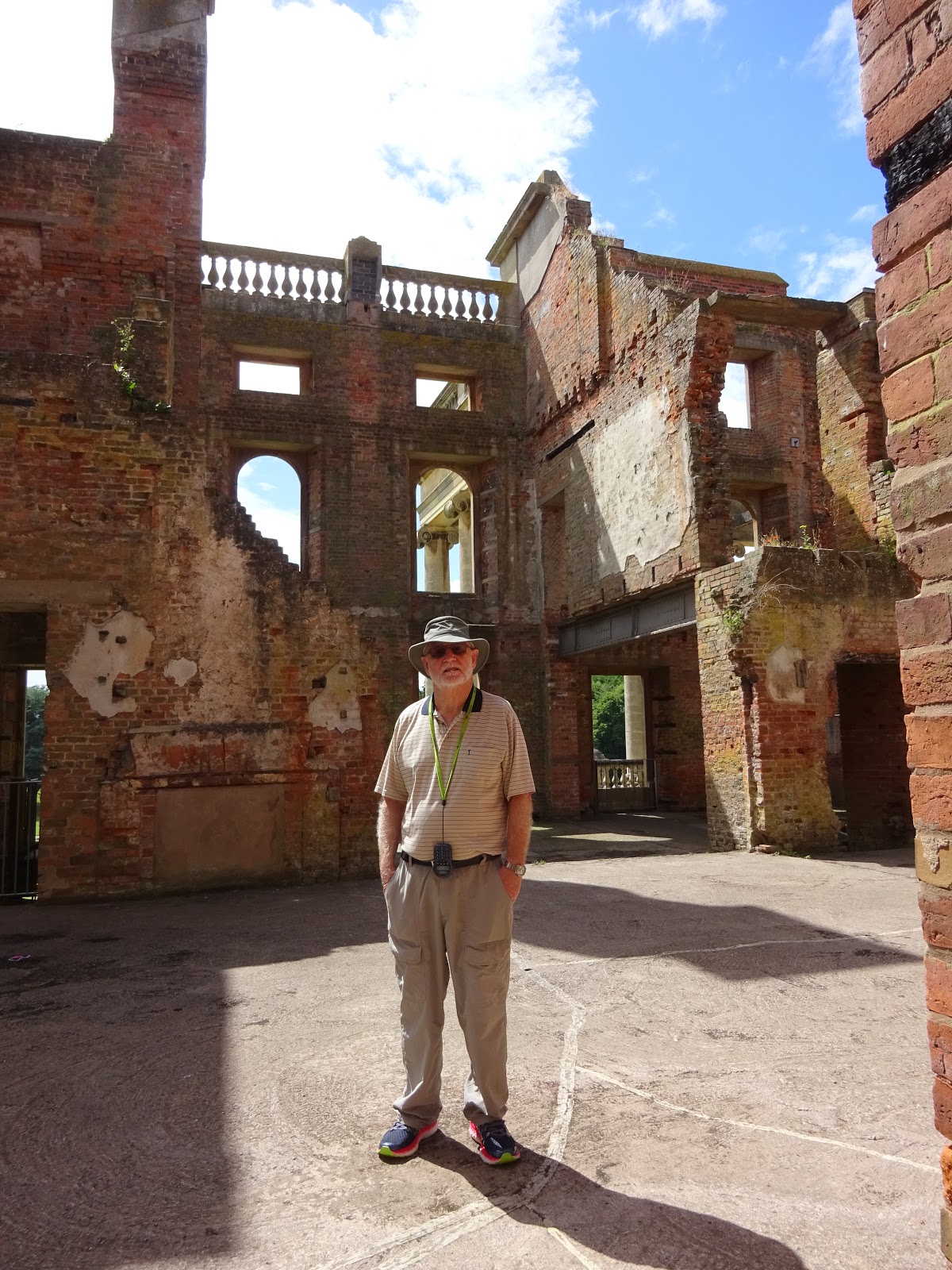
Our B&B hosts suggested we visit Witley Court, a ruined Italianate mansion set in the countryside. The ruins of the house are spectacular but what people really come to see is the fountain which survived the fire that destroyed the house and has now been resorted to it's former glory.

The perseus and Adromeda fountain is turned on every hour for about 20 minutes for a fabulous display.


Next door to the house is a magnificently decorated church.  It seemed unusual to me for such a richly decorated church to be here in the countryside.  


Following our visit to Witley Court we had enjoyed coffee and cake in the tea rooms next to the church and then decided we would go and visit Croft Castle in Hereford.  
It has been home to the Croft family over 30 generations spanning over 1000 years and there are still two apartments that are lived in today. 

It was home to the Croft family before the Doomsday Book.  We toured all the rooms on the ground floor and one room on the top floor.  The remainder of the upstairs rooms form the two apartments.

There are many acres of parkland to explore and views of the Breacon Beacons and there is a lovely walled garden that we wandered around.

Croft Castle

Croft Castle

Inside Croft Castle

The walled garden Croft Castle

Garden at the rear of Croft Castle